CareerQ — Career Exploration Platform
A platform that helps young people explore careers through the real experiences of people already working in them.
I explored the problem through 20 interviews, 95 survey responses, and MVP experiments — eventually shaping CareerQ around first-hand career experiences.
Role
Product Designer
Scope
Product research, UX, UI
Research methods


1.Context & Challenge
Choosing a career is difficult when you don't know what you like or what different professions are actually like.
I explored the problem through 20 interviews and a survey of 95 respondents across students, young people and professionals.
Research highlights
82%
wanted to understand what the actual work process looks like
69%
wanted to understand what lifestyle a profession allows
41%
didn't know what they liked
36%
wanted to hear from people working in the industry, but didn't have the opportunity.
Task
Help users move from: “I don't know what to choose” to “I understand what this career could actually be like.”
2.From Research to Product
I tested the key assumptions with lightweight MVPs before shaping the final experience.
MVP validation
Landing page. Tested initial demand.
Telegram bot. Tested whether users would look for people from a specific field and ask them questions.
Notion MVP. Tested an adjacent hypothesis around university application planning. The hypothesis didn't show enough value, so I dropped it.
The Telegram MVP confirmed interest in talking to people from the industry. Feedback also showed that users wanted to understand a person’s experience before contacting them.
This shaped the core product: exploring a profession through the experience of people who already work in it.
3.Key Product Decisions
1.Help users know where to start
Problem
Users could explore many professions and topics, but 4/5 participants in usability testing didn't know where to start.
Decision
A short questionnaire on the homepage. It asks about interests and preferences and generates a smaller set of relevant professions.
Outcome
Instead of browsing an overwhelming catalogue, users get a clear starting point for exploration.


2.Show what the work is really like
Insight
82% wanted to understand what the actual work process looks like.
Decision
Added a Typical Day section to specialist profiles.
Outcome
Users can get a concrete picture of the profession, rather than relying only on a generic job description.

3.Give context before contact
MVP feedback
Users wanted more than just the ability to ask a specialist a question. They wanted to understand who this person is and what experience they have.
Decision
I structured the specialist profile around:Career Path, Typical Day, Questions & Answers Experience, Services.
Outcome
The specialist becomes a source of structured first-hand information, not just a person users can contact.

4.The Core Experience
The product brings the decisions together into one journey:
01.Discover
I don't know what to choose.
02.Narrow down
The questionnaire suggests relevant professions.
03.Explore
I learn about a profession and see people working in it.
04.Understand
I explore a specialist's career path and typical day.
05.Ask
I ask a specific question and learn from their experience.


5.Product Structure
These three entities support the journey from exploring a career direction to learning from someone who actually works in it:
Professions. Explore career directions and understand what they involve.
Specialists. See real career paths and day-to-day experiences.
Questions. Ask about things that are difficult to understand from generic information.
6.Outcome
Research
20 interviews
95 respondents
Validation
MVP feedback
User value
From browsing many options to getting a starting point and exploring relevant careers.
Other projects


Improving Lead Conversion Through UX Audit
UX audit of a B2B industrial equipment website focused on improving lead generation through data-driven, targeted UX improvements.
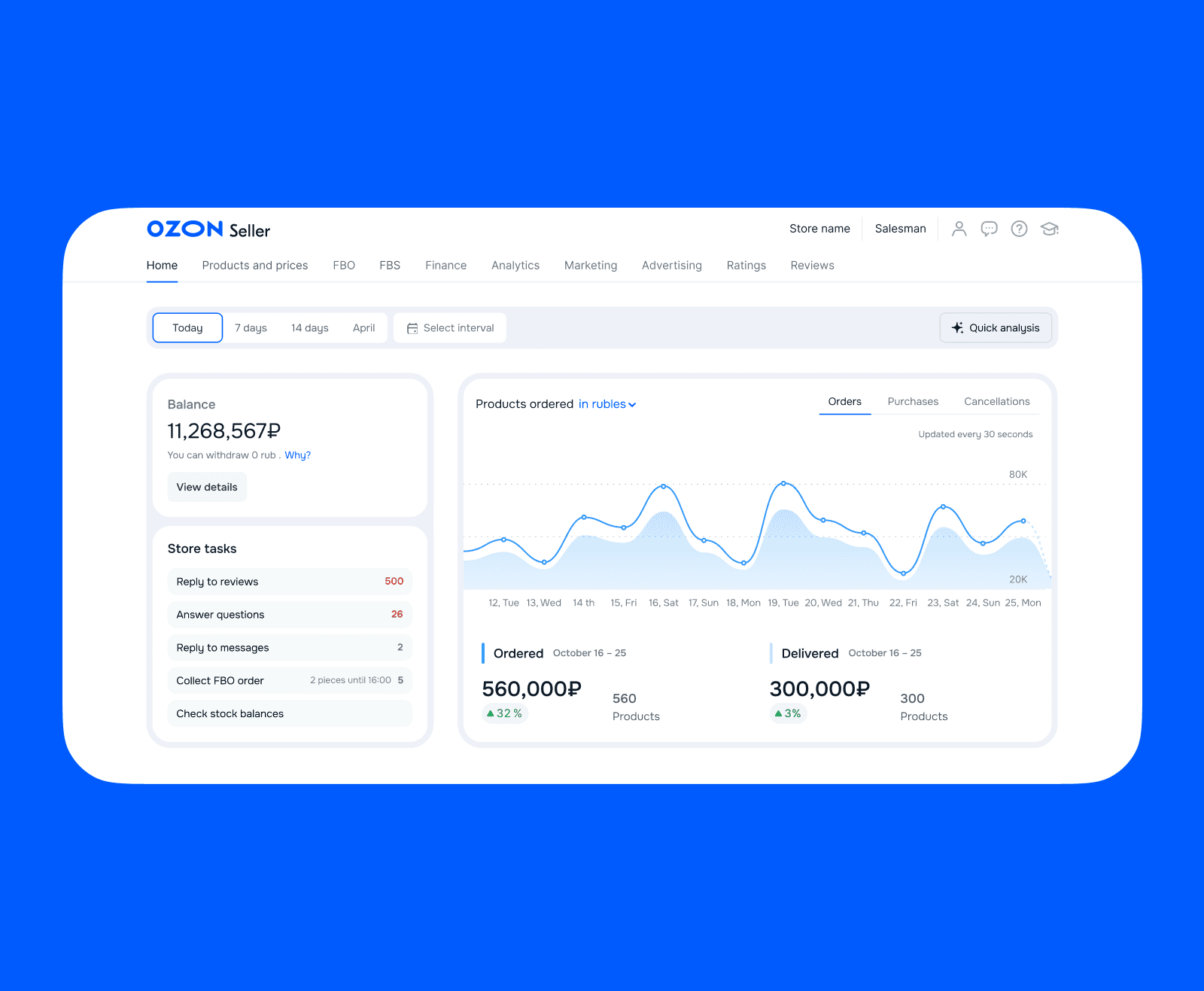

Ozon Seller Dashboard Redesign


An end-to-end product design project for a hotel booking app, from UX research and product strategy to information architecture, UI design, and a scalable design system.